
In the paint and varnish industry, calcium carbonates (CaCO₃) are indispensable components of modern formulations. They serve as functional fillers, improve opacity, regulate viscosity, increase mechanical stability and contribute to surface quality.
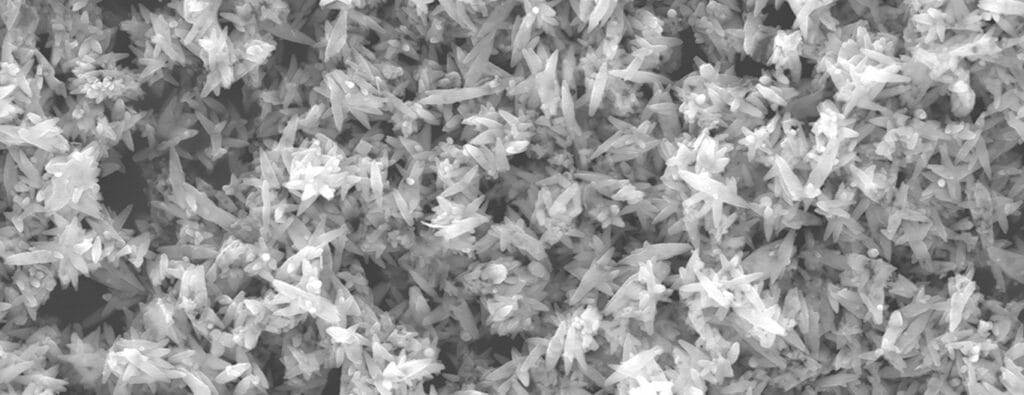
One of the most valuable properties of precipitated calcium carbonate (PCC) is its use as an extender for titanium dioxide (TiO₂) in paints. It promotes a spacing effect between the titanium dioxide particles, reducing the amount used and thus lowering the cost of formulations. PCC is synthesised using a complex manufacturing process and high-quality, high-purity raw materials. The result is a functional pigment with a very fine and uniform particle size and exceptional optical properties. Together, these properties ensure excellent opacity and whiteness in the paint formulations in which it is used.
The products of the Calmit Group are specially tailored to the requirements of the paint and coatings industry – from emulsion paints and industrial coatings to powder coatings.
Why lime & functional fillers are indispensable for paints and coatings
Calcium carbonate is used as a filler in emulsion and interior wall paints, ensuring high opacity, excellent whiteness and even pigment distribution. Calcium carbonates are used in industrial paints and various coating systems, where they contribute in particular to increased abrasion resistance, stable edges and enhanced chemical resistance. Finely ground carbonates are used in powder coatings and synthetic resin systems to optimise flow properties and improve thermal stability. In fillers and primers, lime products play an important role in controlling viscosity, optimising drying behaviour and ensuring a homogeneous surface. In addition, sustainable formulations increasingly rely on natural fillers to reduce the content of volatile organic compounds (VOCs) and improve the environmental balance.

Product solutions – tailored to paints & coatings
Are you developing paints, coatings or coating systems and looking for high-quality, reliable functional fillers? Our sales staff will be happy to advise you on the right products.
- Calcium carbonate and mineral products with defined grain structure for emulsion paints, fillers and primers.
- High-purity calcium oxides/hydroxides (fine lime, micronised lime, hydrated lime) for special formulations with specific requirements in terms of reactivity and pH control.
- Precipitated calcium carbonate PCC (Calprec PA) with precise particle distribution – ideal for industrial paints, powder coatings and high-end coatings.